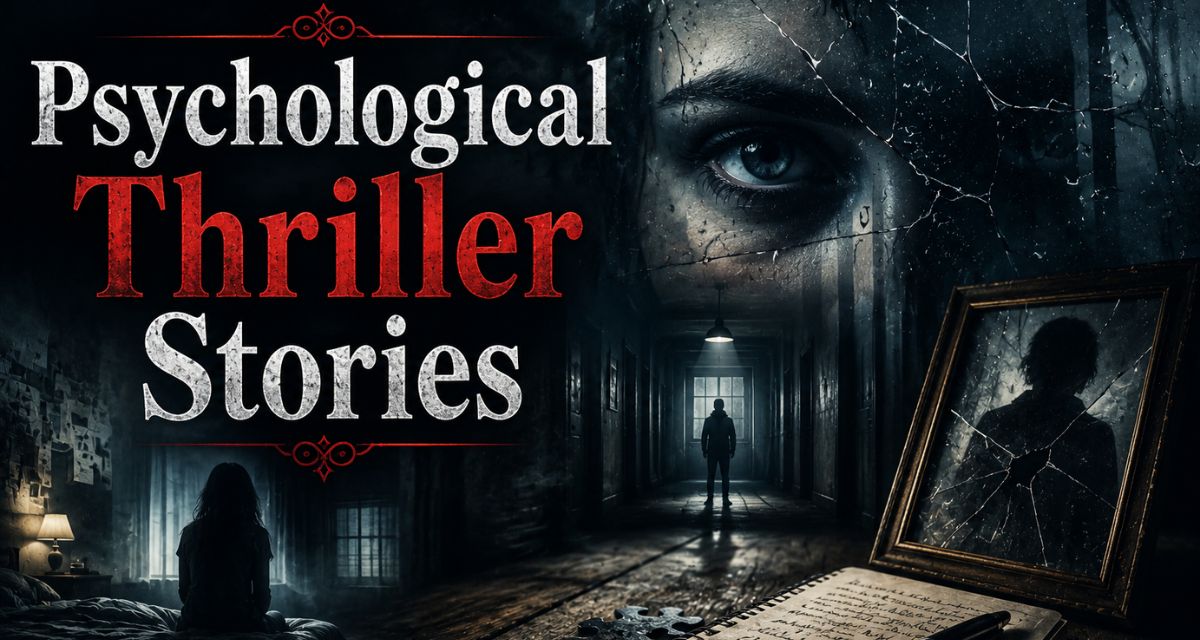
When you take on the task of reading psychological thriller books, you presume some thrill, suspense, fast-paced twists, and tons of surprises waiting for you. As the genre evolved and got deeper these thrillers invite the mind of the readers to become part of the story, where the whole focus shifts to the psychological tensions and mind games.
It explores what people think, hide, fear, and imagine, often blurring the line between truth and illusion. That is exactly why this genre remains so gripping for readers who enjoy suspense with emotional depth.
Unreliable narrators and shocking twists make psychological thrillers unforgettable. Whether you are new to the genre or looking for your next read, understanding these core elements explains their lasting impact.
Psychological Thriller Definition
When we go by the psychological thriller definition, we would realize that these are the stories that begin with tension rooted in the human mind. In these stories, the greatest threat is not always a weapon, a criminal, or a chase. Instead, the danger often comes from manipulation, mental instability, buried trauma, hidden motives, or distorted perception.
What separates the psychological thriller genre from others is the essence of suspense that these stories bring to the table. Readers are not only asking, “What will happen next?” They are also asking, “Who can be trusted?” and “What is really true?” That uncertainty is what keeps the genre emotionally intense and intellectually engaging.
A psychological thriller often places its characters in situations where the mind becomes the battlefield. Fear, paranoia, guilt, revenge, and obsession push the story forward, making every interaction feel loaded with meaning.
Psychological Thriller Characteristics That Define the Genre
The strongest psychological thriller characteristics work together to create a sense of unease that builds steadily. These stories are rarely simple. Instead, they rely on emotional complexity and carefully layered suspense.
However, according to the experts, when we go through multiple elements of psychological thriller plots, one of the most favored is the presence of an unreliable narrator. Readers may see events through the eyes of someone who is confused, traumatized, deceived, or mentally unstable. This creates doubt and forces the audience to question every detail.
Another important feature is mind games. A strong psychological thriller often involves manipulation between characters. One person may be hiding the truth, controlling another person’s emotions, or setting up a false reality. These power struggles add tension without needing constant physical action.
Moreover, it has been experienced that the essence of slow-burning romance is also one of the key characteristics of psychological thriller stories. Rather than revealing everything too quickly, the story unfolds in layers. Small clues, unusual behavior, and hidden secrets create a growing sense that something is deeply wrong.
In addition, one of the dominating aspects that often gets overlooked is the core setting. Atmosphere matters as well. The setting in a psychological thriller often reflects the emotional state of the characters. A quiet house, an isolated town, a tense workplace, or a seemingly normal family environment can all become unsettling when secrets begin to surface.
Common Themes of Psychological Thriller Stories
The common themes of psychological thriller fiction often revolve around the darker side of human nature. These themes make the stories feel both disturbing and believable.
Obsession is one of the most powerful themes in the genre. A character may become fixated on a person, a memory, a crime, or a need for revenge. That obsession can quickly spiral into destructive choices.
Another notable theme is the issue of identity. Many psychological thrillers ask what happens when a person is not who they seem to be. Doppelgängers, false identities, hidden pasts, and secret lives all fit naturally into the genre. These ideas create suspense because they challenge the reader’s sense of reality.
Trauma also appears frequently. Past experiences often shape present behavior, and characters may struggle with guilt, grief, fear, or emotional scars that affect how they see the world. In many cases, the truth of the past becomes the key to understanding the present conflict.
One of the most common themes that you are expected to find in psychological thriller stories is deception. It is often found between partners, families, friends, or strangers, creating emotional pressure that builds scene by scene. Readers keep turning pages because every revelation changes what they thought they knew.
Elements of Psychological Thriller That Keep Readers Hooked
While most people have their own personal choices and some of them have their own preferences, what makes the genre an unarguably personal favorite for them. However, the most effective elements of psychological thriller fiction are designed to create tension on both a plot level and an emotional level. Readers are drawn into the mystery, but they also become invested in the characters’ inner struggles.
Twists are one of the most recognizable features of the genre. A well-written twist does more than shock. It reshapes the story and forces readers to rethink what came before. In the best thrillers, clues are planted early, but the truth remains hidden until the right moment.
Conflict in psychological thrillers is often deeply personal. Instead of simply escaping danger, the protagonist may need to confront painful truths, broken relationships, or their own mind. This makes the suspense feel more intimate and memorable.
Pacing also plays a major role. A good psychological thriller balances mystery, tension, and emotional development. It knows when to slow down and build dread and when to deliver a revelation that changes everything.
Conclusion
Understanding the characteristics of psychological thriller stories helps explain why this genre remains so compelling. With its focus on the mind, emotional tension, unreliable perspectives, and shocking revelations, the Psychological Thriller Genre offers a reading experience that feels both suspenseful and deeply human.
From the common themes of psychological thriller fiction to the most effective elements of psychological thriller storytelling, the genre thrives on uncertainty and complexity. Whether you are picking up a new psychological thriller book or exploring the best psychological thriller books for inspiration, one thing is certain: the most memorable thrillers are the ones that make readers question everything.